Welcome
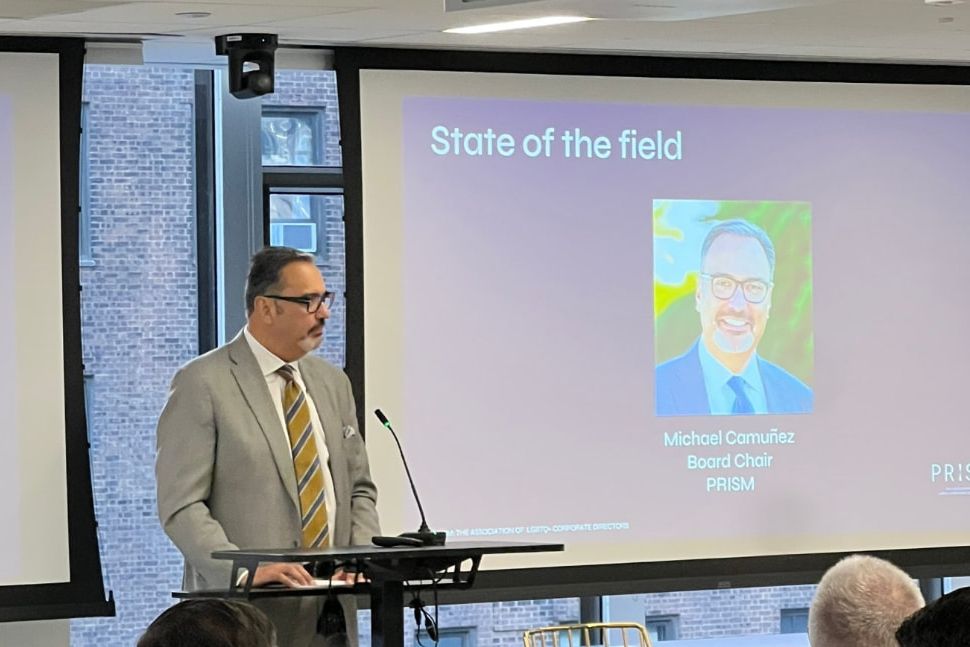
Thank you, Fabrice, for that introduction and for the extraordinary commitment you bring to PRISM. I also want to echo your thanks to our host, our sponsors, and everyone who helped bring us together.
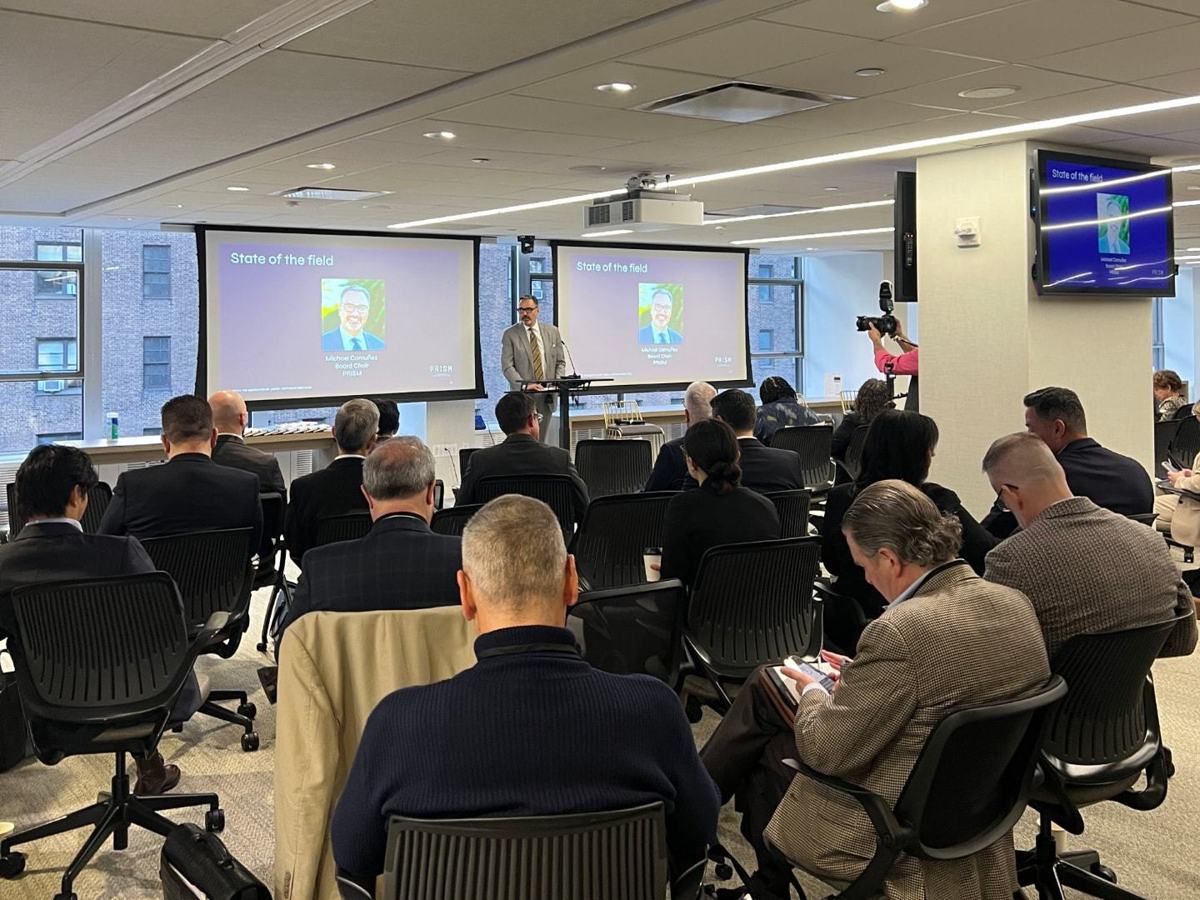
Good morning, everyone. It is wonderful to look around this room and see so many friends, colleagues, and people I'm looking forward to getting to know.
There is something special about this gathering. Many of us have spent years building careers in places where we weren't sure how much of ourselves we could bring to work. Some of you helped open doors that others in this room are now walking through. Others are preparing for a first board opportunity, with experience and talent that deserve to be better known.
Today, we have the chance to learn from one another, strengthen those connections, and think together about what comes next. I'm grateful you're here.
We also come together at a difficult moment. Corporate commitments to inclusion are being reconsidered. Familiar language is disappearing from policies and public reports. Accomplished executives are asking whether being publicly identified as LGBTQ+ will help their careers or hurt them.
For those of us who remember believing that being openly gay was incompatible with professional success, hearing those questions again is sobering.
We should be honest about that. But I also want us to recognize the strength in this room, and the opportunity we have to build something that lasts. I feel confident about PRISM's future because of the people willing to help shape it. Together, we have experience, relationships, and a shared commitment to making our community, and the boards we serve, stronger.
What the Evidence Tells Us
To understand where we should put that effort, we need a clear picture of where we stand.
We can all point to LGBTQ+ leaders who have reached the highest levels of business. Their accomplishments matter. But individual successes don't tell us how readily the next generation is finding its way into the boardroom.
Are new doors opening? Is our talent becoming more visible? Are we building on the progress others worked so hard to achieve?
That is why PRISM's research matters.
Our latest analysis identifies 45 openly LGBTQ+ Fortune 500 board seats, down from 50 in 2024. It is the first decline since we began tracking representation in 2022.
Much of that decline reflects acquisitions, privatizations, and changes in the Fortune 500. It does not establish that boards removed directors because they are LGBTQ+. And our count, which draws on Equilar data and our knowledge of openly LGBTQ+ directors, cannot capture people whose identities are not publicly known.
Perhaps more striking, we identified only one genuinely new, openly LGBTQ+ director entering this Fortune 500 group since 2024. That does not mean only one LGBTQ+ person was appointed. But it raises a serious question about the visibility of qualified candidates and their pathways into board service.
Separately, disclosure has fallen sharply. A 2025 study by PeopleReturn, formerly DiversIQ, found that the share of S&P 500 companies reporting LGBTQ+ board representation fell from nearly 30 percent to just over 8 percent.
Out Leadership's newly released OutQUORUM research adds another troubling finding: 443 U.S. companies dropped LGBTQ+ references from their board diversity policies or composition reports while continuing to include gender and race or ethnicity.
Apple illustrates the distinction. Its 2025 proxy identified Tim Cook as LGBTQ+. Its 2026 proxy omitted that disclosure, while he remained a director nominee. The person had not disappeared; the disclosure had.
Who is serving, and what companies report, are different measures. Both deserve our attention.
PRISM's Next Chapter
Those findings help explain why we're investing so much thought and effort in PRISM's next chapter.
Four years ago, Fabrice and our founding board began with a vision and very few resources. What followed depended on personal commitment: people lending their names, making introductions, opening their homes, and giving their time because they believed this community needed an organization of its own.
We owe them a great deal. They gave us the foundation on which we are now building.
Our responsibility is to turn that early effort into an enduring institution, with the capacity to serve our members well, a meaningful presence in the governance world, and relationships that put our community in a stronger position.
I often think of the advancement of the LGBTQ+ community as a three-legged stool.
One leg is the work to secure and defend our basic human and civil rights, led in the courts by organizations like Lambda Legal. A second is the work of HRC, PFLAG, and so many community groups building visibility, acceptance, support, and belonging. Some of the people doing that work are here today. Our community owes an enormous debt to your persistence and courage. Thank you.
The third leg is leadership in the private sector, including in the C-suite and the boardroom. That is where PRISM has a particular responsibility.
Corporate leaders help shape institutions in which millions of people work, build careers, and support their families. Our community needs to be part of that leadership, and PRISM's role as a professional association complements the essential work others are doing.
Effective participation requires something of us. Being LGBTQ+ does not, by itself, make us effective directors. We have to bring deep experience, preparation, independent judgment, and a serious understanding of our fiduciary responsibilities. We earn the confidence of our colleagues through the contribution we make.
We also bring our full selves. Our lived experience informs what we notice, how we listen, which assumptions we question, and how we understand the people affected by a decision. Alongside our professional experience, it can make our judgment richer and our contribution more valuable.
That is the conviction behind our purpose, and the theme of this year's conference: Sharper perspective. Stronger boards.
It is also why we became PRISM. Our LGBTQ+ identity remains foundational. The new name gives us a clearer way to express what we intend to contribute: stronger governance and corporate excellence, informed by the experience and talent of this community.
We've begun putting that ambition into practice through our rebranding, new website, research, programs, and partnerships. Now we need to make membership more valuable. For sitting directors, that means substantive conversations and meaningful relationships with peers. For aspiring directors, it means preparation, candid advice, and access to people who understand how board searches work. And for all of us, it means more opportunities to connect beyond New York and Washington.
The PRISM Leadership Circle
There is one initiative I'm especially proud to share with you today. It grows out of something I felt quite personally.
When the attacks on DEI began in early 2025, I wanted to talk with other diverse directors. What were they seeing and hearing? How were their boards responding? How did they intend to show up?
I could call Black, Latino, and Latina directors with whom I had built friendships through gatherings around the country. Those relationships gave me people I trusted to compare notes with.
But it saddened me to realize that I didn't have that same network within our own LGBTQ+ community. Our community includes some of the most accomplished corporate leaders and directors in the country. Yet many of us simply didn't know one another. That felt like a missed opportunity, especially at a moment when those connections mattered so much.
If we don't know one another, it's harder to support one another. And it's harder to hold open the door for the generations of LGBTQ+ directors who follow us.
We all know there is power in community. But community takes intention. Someone has to bring people together. That is what we aim to do with the PRISM Leadership Circle, and today we're taking an important first step.
I'm deeply honored to announce the inaugural members of the PRISM Leadership Circle.
These leaders bring decades of experience running major businesses, chairing boards and committees, navigating difficult decisions, and earning the confidence of colleagues and shareholders. And they have agreed to lend their names and experience to PRISM's work: to get to know one another, build a community of peers, and help create opportunities for aspiring directors.
Among them is Jim Fitterling, Executive Chairman of Dow, Lead Independent Director of 3M, and newly appointed Independent Director of Bank of America. Jim's career and standing in American business speak to the caliber of leadership this community brings together. I'm deeply grateful for his support. But look at the remarkable leaders on this list, whose collective experience has led and is leading some of the largest and most important companies in the world. These are among the best of our community, and we are so thankful they are standing with us.
I also want to recognize inaugural members here with us today: Torrence Boone, Independent Director of Macy's; Myrna Soto, Independent Director of CMS Energy and TriNet; Betsy Bernard, Independent Director of Zimmer Biomet; and David V. Hedley III, Independent Director of Sanmina. Betsy and David, along with me, also serve on PRISM's board. You'll hear from each of them later in today's program. Would you please stand so we can recognize you?
Thank you, and thank you to every member of this inaugural group.
The Circle brings together leaders with at least five years of corporate board experience and a shared desire to help our community advance. It is an informal, non-fiduciary gathering, separate from PRISM's governing board, although several of us serve in both. We'll formally launch and convene the Circle in 2027. But we couldn't wait to share this group with you.
For me, this is what I wished I could turn to when I picked up the phone: people who understand the responsibilities we carry, who can learn from one another, and who are willing to help someone else find their way into the room.
Now we have the chance to build it together.
Introducing David Glasgow
That spirit runs through today's program. If you're an experienced director, consider whose path you might help open. If you're preparing for board service, tell us what would help you move forward. That is how a gathering becomes a community, and how a community creates opportunity.
There is no better way to begin than with our keynote speaker, David Glasgow.
David leads NYU's Meltzer Center and coauthored How Equality Wins with Kenji Yoshino. His work asks how institutions can advance equality in ways that are principled, effective, and durable.
That question matters directly to boards. How do we sustain opportunity while taking concerns about fairness and merit seriously? How do we adapt to a changing environment without losing sight of our values? And how do directors oversee those choices thoughtfully?
David's keynote, How Equality Wins: Governing Through Backlash, will help us explore those questions. David, thank you for joining us. Please join me in welcoming David Glasgow.
Meet the founding members of the PRISM Leadership Circle →